Yesterday morning we ventured within the famous walls and under the expert guidance of Marko, local resident and walking tour guide, we learnt about some of the history and architecture of the Old Town.
Dubrovnik was formerly part of its own free state, the Rebublic of Ragusa, between its independence from the Venetians in the 14th century and being conquered by Napoleon’s Empire in 1808. Under the protection of the Ottoman Empire during this period, the city flourished as a major maritime trading hub in the Mediterranean and became noted for its wealth and skilled diplomacy. It’s population hit it’s peak in the 16th century at about 60,000 and most of its current architecture is reflected by various Italian influences.
The Old Town origin dates back to the 7th Century, as does its defensive walls however the current fortification around the town was mainly constructed between the 14th & 17th century and represents one of the best fortifications of the Middle Ages. Being on a major fault line it however suffered from a major earthquake in 1667 which did not affect the wall significantly but destroyed many of the buildings within.
In current times it has been a major tourist destination and became a UNESCO World Heritage site in 1979. Despite this it suffered heavy shelling by the Serbian&Montenegrin Forces in 1991 during the Yugoslavian Civil war. This has been one of the reasons for the reduction in population of the Old Town, which has gone from about 5,000 to ~900. Whilst the city has been completely restored it has also, due to its tourism attraction, undergone significant “restaurantisation” with all kinds of culinary delights, bars & cafes along the narrow streets and plazas.
In the afternoon we took a ride in the cable car up Mt Srd for some spectacular views and a visit to the museum of civil war housed in the Srdj Imperial Fort built during the Napolean age and an strategically important location for the defence of Dubrovnik during the war in 1991.
A great taster into the multifaceted history of the city and some of its ironical past!
A Cursed Island!!
Today we went into the old town of Dubrovnik and found that we’d missed the start of the walking tour we wanted to catch. I saw a few people standing around with t shirts on saying “sea kayaking info and booking” on them so we spoke to one of them then decided that we would go on a sea kayaking tour. It also went around a small island, which actually looked quite big for kayaking!
First we went into a big semi cave which we parked and went snorkelling for a bit and saw all kinds of fish which was also cool and refreshing. Then we carried on and the guide told us a story about the 1991 – 1995 civil war, when we were looking at a 5 star hotel in which a fight broke out which lasted 5 days during the civil war. We started kayaking again, past a massive cruise liner docked for the cruisers to see Dubrovnik, and then into a cave. The island we went around was called Lokrum, which was originally owed by monks living in a monastery, who were ordered to leave so they put a curse on the island on their last day by lighting two candles and holding them upside down then dripping the wax onto the rocks around the edge of the island three times round, and the curse meant that any owner of the island get bad luck until there is not a single drop of wax on the island. The Austrian King, Maximilian man who didn’t believe in the curse had a holiday house built on the island. Later he was executed and his son committed suicide and his wife went crazy. That was when people started believing in the curse and ever since then no one has lived on the island. Then we kept on kayaking and by then my arms were sore because we’d been going for 2 and a half hours. When we got back, we walked home after a great sunny day of kayaking!!
Click here for some photos:
Nilay
Why the rifles?
After leaving our apartment in Hvar (me and Mama claimed we were dizzy which, when we left the apartment, found out from our host Sandra, that it might have been the south wind, a possibility as we had a south facing balcony) we headed back through the Pitve tunnel heading to Sućuraj on the east side of the island of Hvar. On our route both before and after the tunnel we saw something strange. On the side of the road every now and again men stood on the road, with rifles in hand, with rather large ammunition, probably to shoot a deer or wild boar? (we hope!)
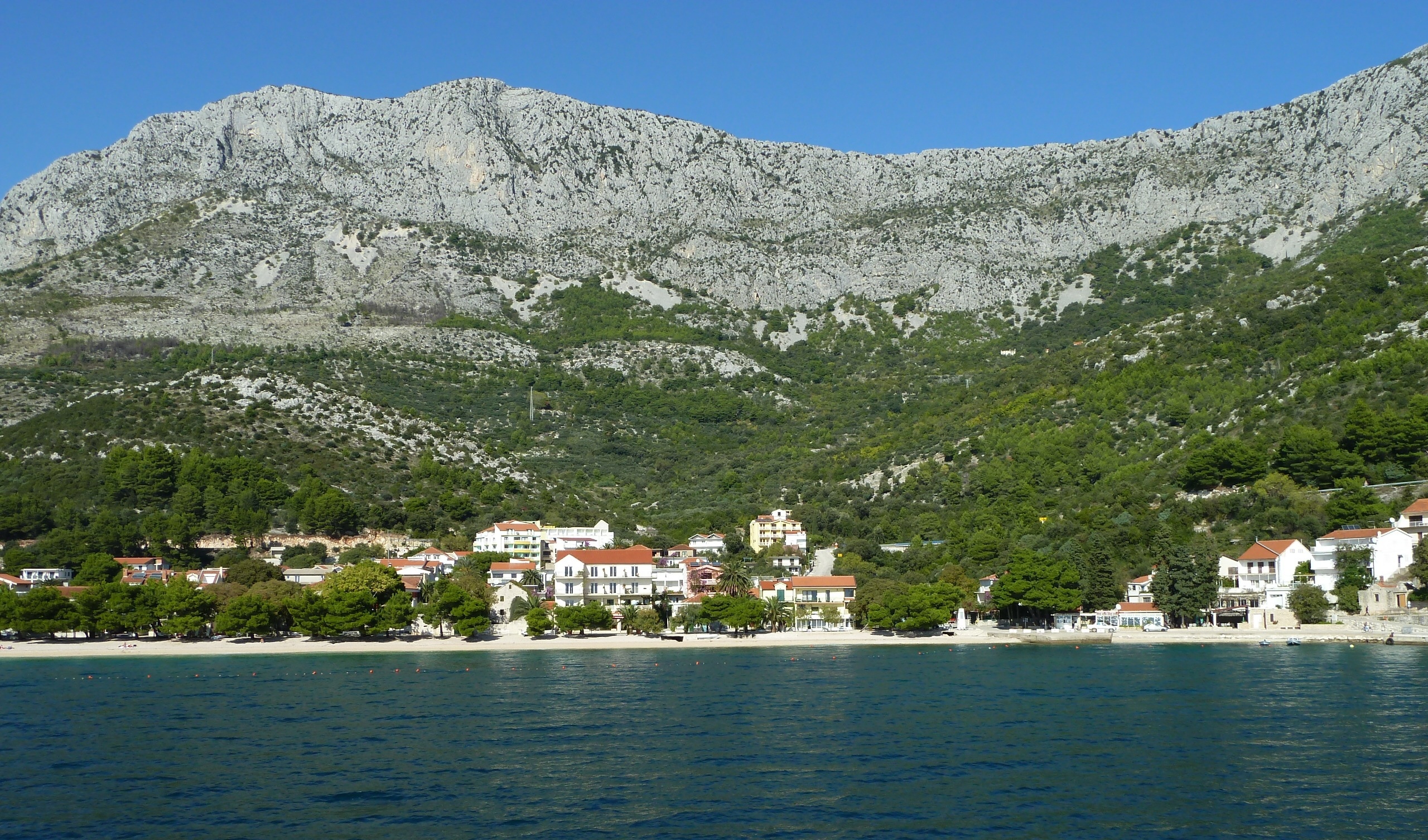
In Sućuraj we boarded a 30 minute ferry to Drvenik on the mainland, which we had a short siesta on before having lunch ( I know, siesta before lunch?) in Drvenik. Once we’d finished our ham and cheese toasties we finished our journey to Dubrovnik with a 2 hour drive taking us out of Croatia and into Bosnia then back out of Bosnia and into Croatia again where we came to a great apartment where the owner kindly, as the next door apartment is not currently being used, let us let us use the next door balcony which has a great view of the sea & the Old Town. We finished our great day with( for me and Nilay) a shared pizza which was so big Nilay and I couldn’t finish it together, and a catch of the day( which was sea bass) each for Mama and Papa.
The light at the end of the tunnel
Yesterday was once again a travelling day. We left Zadar to travel south. In Split we boarded the car ferry to Stari Grad on the Island of Hvar. The 2 hours spent on the ferry were an interesting experience of a Croatian Friday afternoon, as many of the other passengers seemed to be older Croatians travelling to the island for the weekend. They started their weekend celebrations on the ferry and danced and sang and played accordion.
From Stari Grad it was another 30 minute journey to the other side of the island to a small village called Ivan Dolac where we had arranged to stay. The north side and the south side of Hvar are divided by a steep mountain ridge and to get from Stari Grad to Ivan Dolac, one has to travel through the Pitve- Zavala Tunnel, the narrowest, darkest tunnel I ever travelled through. The tunnel is about 1.4 km long with an unsealed, damp road and only 2.3 meters wide, so cars can only travel in one direction at the time. It is completely black with a small dot of light in the distance which increased in size as we came closer to the exit on the southern side of the island.
On the other side, a steep, windy road with magnificent views onto the Adriatic sea and the island of Korcula in the distance took us down to Ivan Dolac and the little apartment by the beach where we are staying.
We arrived just in time to admire the sunset before settling into our accommodation and enjoying some Croatian Karlovacko “Radler” and sampling our host’s own red vine of which
she had kindly given us a bottle of to try. After dinner we spent the remainder of the evening playing cards and looking forward to spending the next day in this beautiful spot.
Maria
Postcard from Zadar
Our 4 day stop in Zadar is represented by a myriad of experiences and images reflected in the photo collage in the link below. A time to reflect on our journey so far, consolidate and plan ahead, whilst also trying to imagine local life in a historic coastal town in Croatia: The history of the Old Town from its early prehistoric origins, the various attacks it has recovered from through the ages, its role as a key port for visitors and fishing hub, locals and tourists alike enjoying its cafe culture, its spectacular seaside scenery and modern architectural icons, and the local residents who must have experienced a significant sea of change in recent times. We have been lucky enough (despite the odd downpour) to enjoy the late summer(autumn) sun as we contemplate what lies ahead…
JR
The Sea Organ
The moon is shining on the blue sea,
While the boats hum on the rippling waves,
Crashing against the white stone steps,
Making the sound of sad whales trapped away.
The Red orange sets behind the twirling grey clouds,
Greeted by the the circle of lights coloured
People sitting on the piano keys listening
As the the organ endlessly plays its tune
Nilay
This refers to the sea organ in Zadar Old Town under the steps into the sea where the moving waves create random harmonic sounds like an organ.
It was designed by the architect Nikola Bašić and opened to the public in 2005.
Jezero Milanovac & the City of Waterfalls
After lounging around in the Funk Lounge Hostel, catching up on emails etc. , we left Zagreb heading for the Plitvička Jezera, a beautiful set of lakes connected by lots of waterfalls, varying in size. After about 3 hours of driving, we arrived at the site of the lakes and had lunch in Clifford. After some thought, we decided that we would come back the next day, greatly due to the fact that the weather wasn’t perfect, (it had drizzled while we were having lunch) and we wanted to get our money’s worth from the entry fees. We stayed the night in the nearby campsite where, as soon as we’d arrived, chosen a place in the campsite and set up, it started pouring down with rain. As soon as it opened, we went to the campsite cafe, primarily for some more space, but also to play some games, such as chess. Here, for the first time ever Nilay beat papa at chess meaning in the space of 2 days both of his children have beat him in chess!
The next day we tried to be as quick as possible packing up so we could have the most time possible at the lakes. After arrival at the lakes( at exactly 10:00) we decided to do walk C, the 4-6 hour walk which included a boat and bus trip. Straight away we got to see the biggest waterfall (78m) called the Veliki slap (slap means waterfall in Croatian). We walked past many other magnificent waterfalls and spectacular turquoise lakes. Just before our boat trip on the biggest lake, the Jezero Kozjak there was a lake and a waterfall named after me! The lake was called the Jezero Milanovac (we learned that Jezero means lake) and the waterfall was called Milanovači slap which linked the Jezero Kozjak and the Jezero Milanovac.
After our fantastic experience in this wonderful national park, which is a UNESCO World Heritage site, we headed down to Zadar where we are staying in a lovely apartment
Milan.
Zagreb
Yesterday was spent in Zagreb, the capital city of Croatia. After a hearty breakfast of eggs and omelette we set out to explore the city. Unfortunately it started to rain almost simultaneously and once we got out of the tram in the city centre, we had to run to shelter from the rain. As the weather was perfect for a museum visit, we made our way to the most curious of Zagreb’s museums: the Museum of Broken Relationships, which had been recommended to us ( and I had been intrigued by the idea that there was a museum with a focus on broken relationships, ever since I had read about Zagreb in the Lonely Planet travel guide. The exhibition was fascinating despite the stories that were sometimes quite sad. Later, we explored the centre of Zagreb by walking past many of the famous buildings, including St Mark’s Church with its colourful slate roof depicting the coats of arms of Zagreb and the triune kingdom of Croatia, Slavonia and Dalmatia and through parks and the botanic gardens. We noted that many of the important buildings in Zagreb, such as museums and theatres, seem to be yellow. Back at our funky hostel, the evening was spent playing chess (and Milan beat J possibly the first time!), we cooked, and did some web-based research about Croatia and where to spend next week. Maria

5,000 miles
It was great to see Michal again an old friend of ours whom we met in London over 20 years ago at Tent City. We loved the old farm house where he lives, and along with the visit to the caves, got to experience the local area with some walks amongst farmlands and rivers and of course some authentic local restaurant cuisine. A great opportunity to catch up & be in the Czech Republic again, however clearly not long enough as Maria & the boys were not a able to complete the 500 piece puzzle before we left and we only got to counting up to 6 in Czech!!
Yesterday was also a trip through a number of countries where en-route to Zagreb in Croatia, we would pass briefly through Austria and Slovenia. This is clearly evidenced by the motorway “vignettes” which are required for these countries which are now starting to cover the windscreen of the van! Somewhere near Vienna we also clocked 5,000 miles (8,000km), which I guess reflects a milestone of how far we’ve traveled, but probably more importantly, how well the van is holding out!!
JR